Roman Travertine, historically known as lapis tiburtinus, is a legendary Italian limestone quarried from the geothermal basins of Tivoli and Guidonia. Characterized by its warm beige palette and unique porous structure, this stone is formed through the rapid precipitation of calcium carbonate in mineral-rich hot springs. Renowned for its remarkable durability and resistance to weathering, it has defined the architectural identity of Rome for over two millennia. It serves as the primary material for iconic landmarks like the Colosseum and the Trevi Fountain. Today, it remains a prestigious choice for both classical and contemporary designs, offering a timeless, earthy elegance. Interestingly, the name travertine is a corruption of the Latin tiburtinus, meaning stone of Tibur.
Roman Travertine is a new arrival, now on hand at our Los Angeles yard.
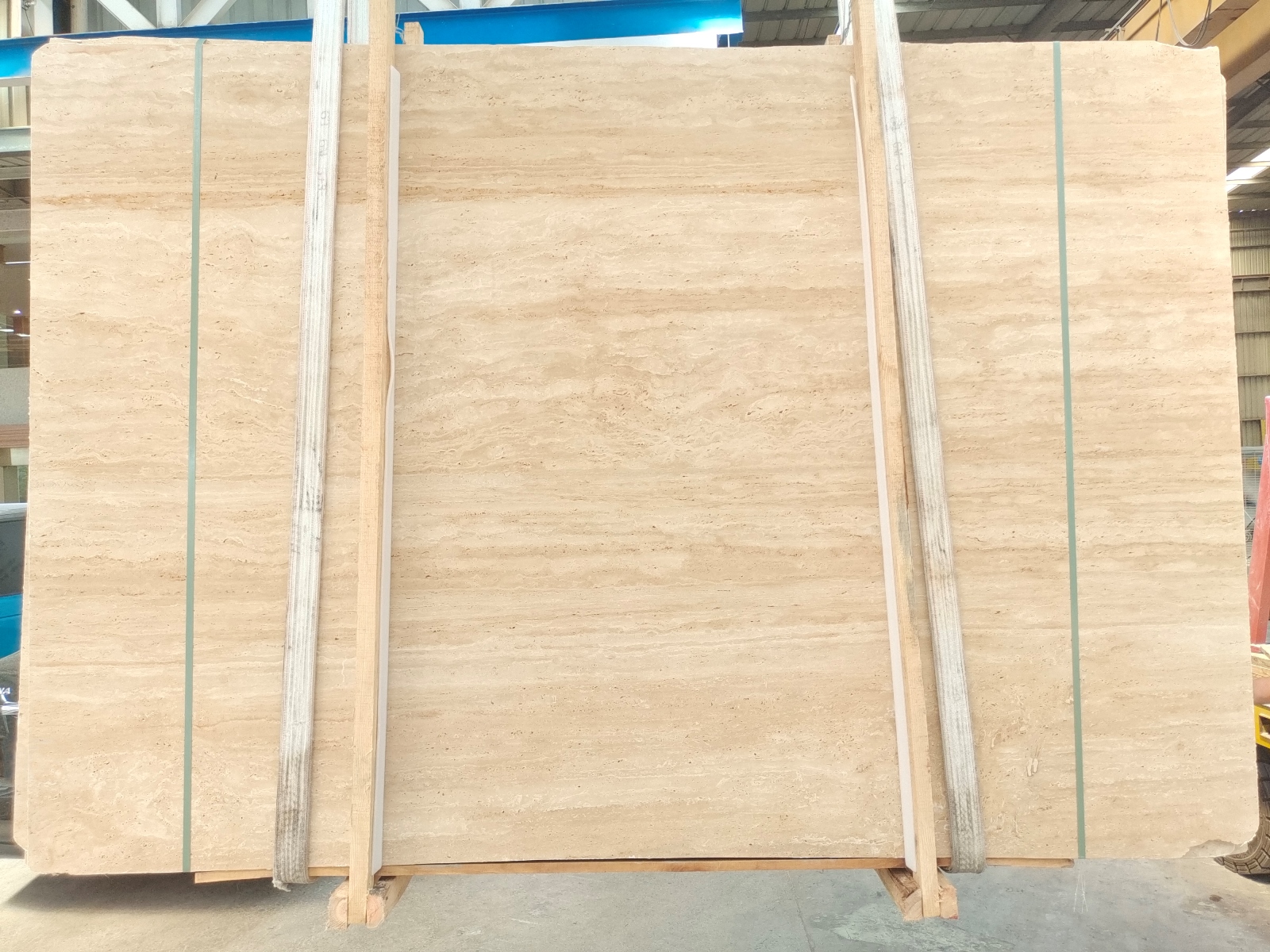
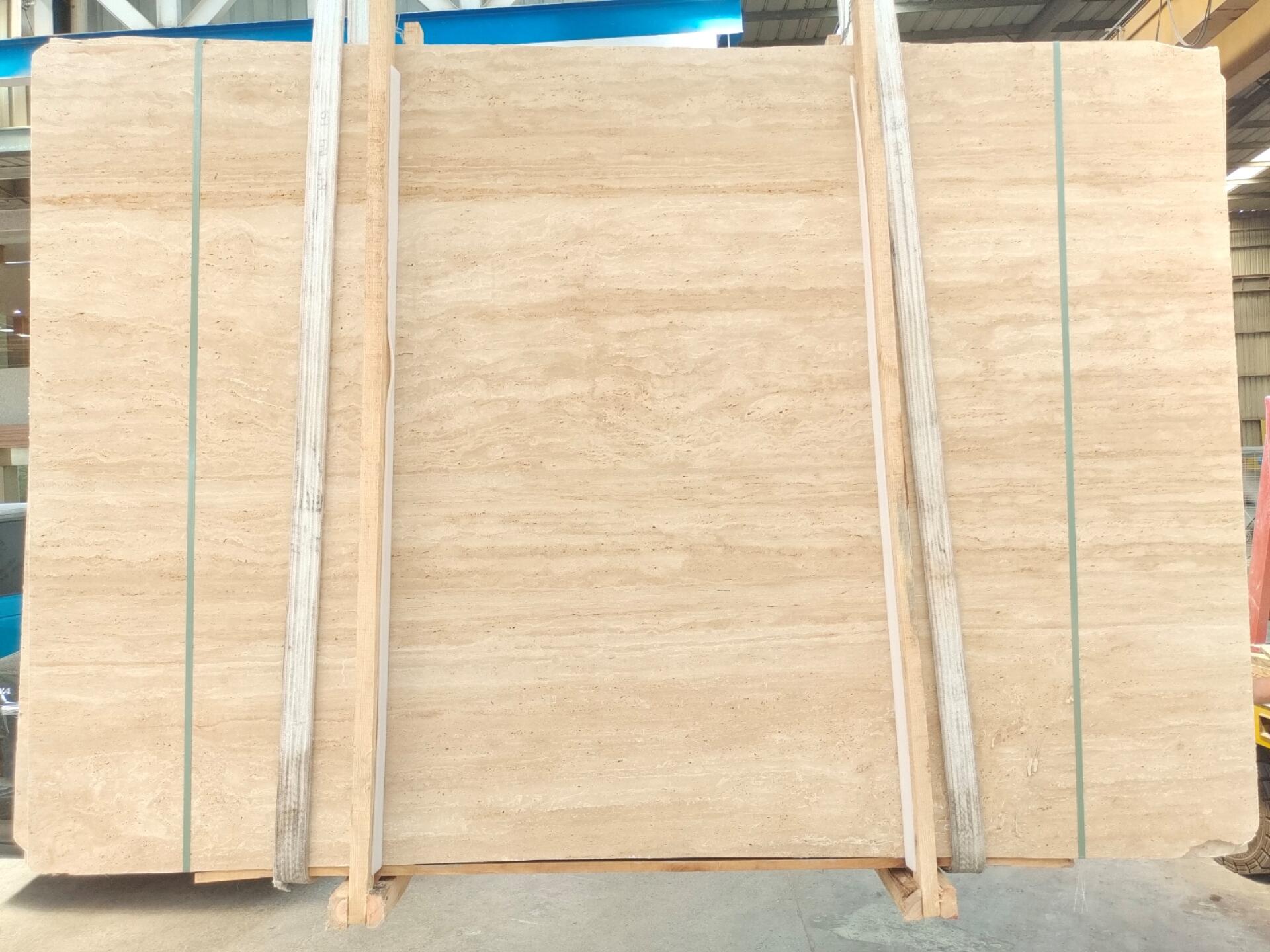
Slabs of Roman Travertine in lot 260303 run from 110″ × 76″ to 112″ × 75″. This is 2 cm beige with ivory, grey, and gold travertine quarried in Italy with a honed finish, and 44 slabs are available and one is on hold at our Los Angeles yard.
This slab
The recorded size of a slab in this lot is 111″ × 76″, about 59 square feet. Sizes across the lot run from 110″ × 76″ to 112″ × 75″. Thickness is 2 cm. The color on record is beige with ivory, grey, and gold. Natural stone still varies inside that description, so the slab itself is the reference for movement and shade. This material is recorded as quarried in Italy.
The honed finish is smooth and matte, without a high gloss. Two centimeters is a standard slab thickness for counters, vanities, and wall cladding.
In the yard
Lot 260303 at our Los Angeles yard shows 45 slabs in stock, one slab on hold, and 44 slabs available. Available means in stock minus slabs on hold.
The slabs can be compared in daylight at our Los Angeles yard before anything is cut.
Where it works
For this kind of stone, the usual applications are floors, showers, and wall cladding. The right use still depends on the finish, the thickness, and how the slab will be cared for after it is installed. Inspiration photos show this stone in a Floor.
The material
Travertine is a form of limestone, often with natural pits and linear bands. Filled travertine has those voids filled for a smoother face. Unfilled travertine keeps the holes. It is widely used for floors, showers, and wall cladding. Shade can shift from cream to gold to silver within one name, so the lot on hand is the one to approve.
About Roman Travertine
Roman Travertine, historically known as lapis tiburtinus, is a legendary Italian limestone quarried from the geothermal basins of Tivoli and Guidonia. Characterized by its warm beige palette and unique porous structure, this stone is formed through the rapid precipitation of calcium carbonate in mineral-rich hot springs. Renowned for its remarkable durability and resistance to weathering, it has defined the architectural identity of Rome for over two millennia. It serves as the primary material for iconic landmarks like the Colosseum and the Trevi Fountain. Today, it remains a prestigious choice for both classical and contemporary designs, offering a timeless, earthy elegance. Interestingly, the name travertine is a corruption of the Latin tiburtinus, meaning stone of Tibur.