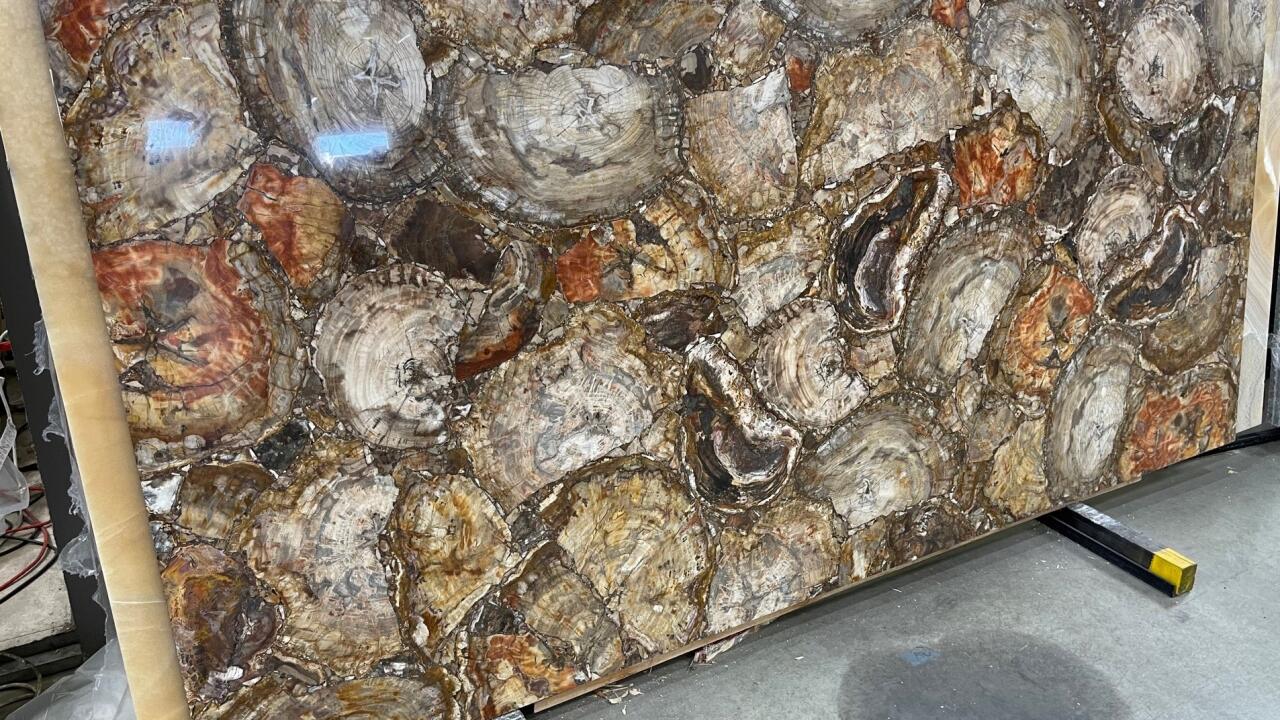
Black Jurassic Petrified Wood is an extraordinary semi-precious stone formed from ancient trees that were rapidly buried by volcanic ash or sediment approximately 200 million years ago. Over millennia, organic matter was replaced by silica-rich minerals through permineralization, preserving three-dimensional details like growth rings and bark textures. This variety is distinguished by its deep, mysterious black palette, often a result of high carbon content or manganese oxides during fossilization. While it offers a timeless, sophisticated contrast for luxury interiors, its rich coloration is uniquely sensitive to UV light. Interestingly, because it is a true fossil, each slab serves as a literal snapshot of a prehistoric ecosystem.
Black Jurassic Petrified Wood — 2 cm semi-precious stone, polished, about 119″ × 63″ per slab. Lot 121662-23 has one slab available at our Los Angeles yard.
This slab
The recorded size of a slab in this lot is 119″ × 63″, about 52 square feet. Thickness is 2 cm.
The polished finish is reflective and lets the color read clearly. Two centimeters is a standard slab thickness for counters, vanities, and wall cladding.
In the yard
Lot 121662-23 at our Los Angeles yard shows one slab in stock, none on hold, and one slab available. Available means in stock minus slabs on hold.
With one slab available, it suits a project that can be cut from a single piece.
Where it works
For this kind of stone, the usual applications are feature walls, bar tops, and accent panels. The right use still depends on the finish, the thickness, and how the slab will be cared for after it is installed. Inspiration photos show this stone in a Wet Bar.
The material
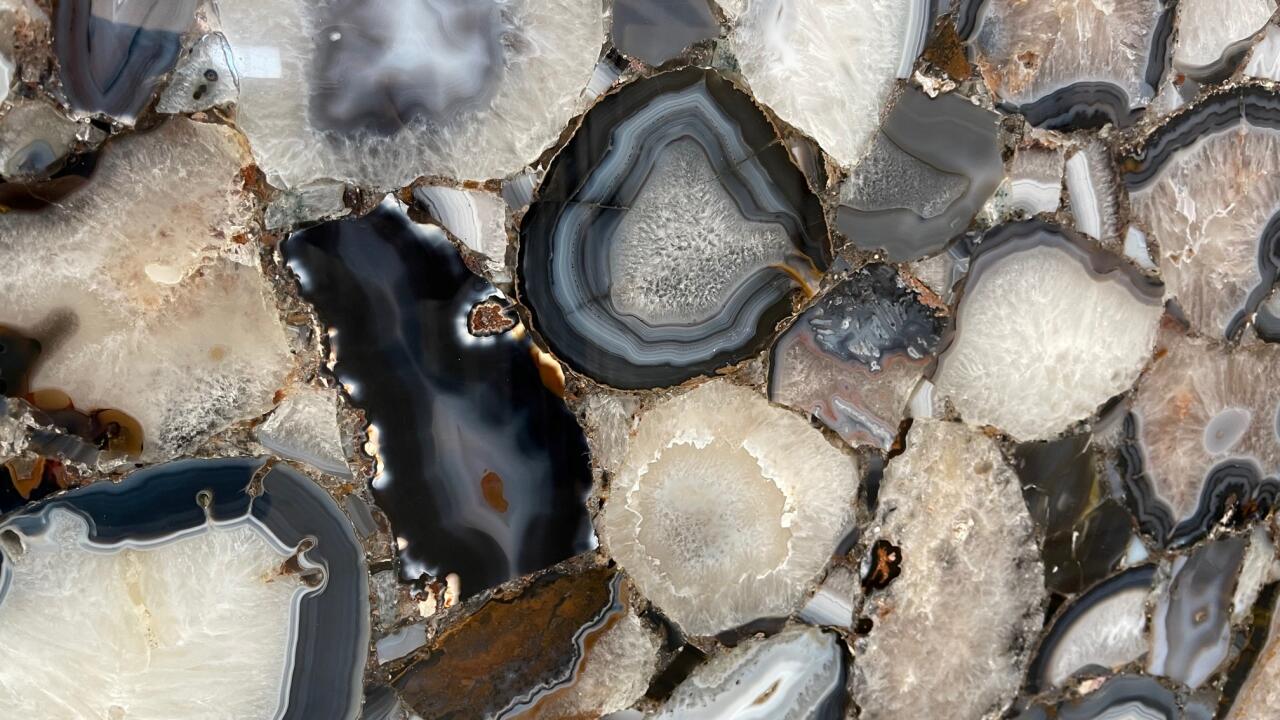
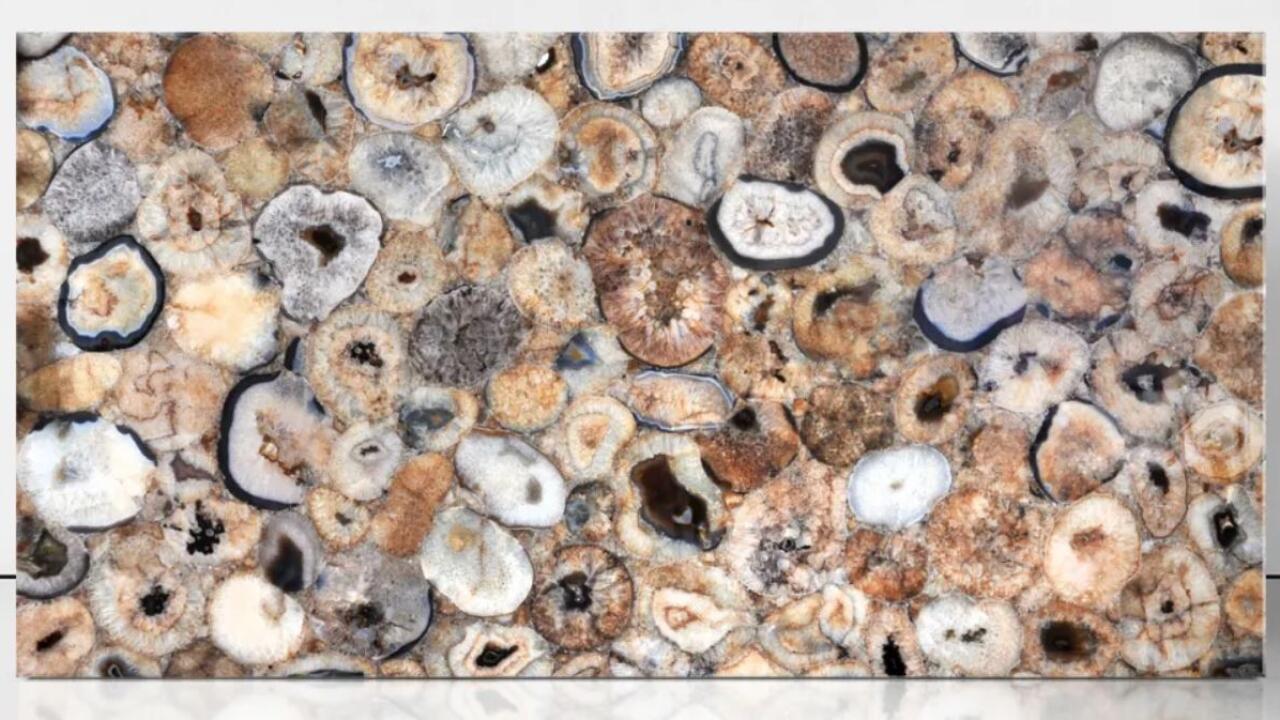
Semi-precious slabs are cut from strongly colored minerals, often quartz, agate, or jasper. They are usually used as feature walls, bar tops, and accents rather than as a full kitchen. Pattern and color are highly individual, so the piece in stock is the one to design from.
About Black Jurassic Petrified Wood
Black Jurassic Petrified Wood is an extraordinary semi-precious stone formed from ancient trees that were rapidly buried by volcanic ash or sediment approximately 200 million years ago. Over millennia, organic matter was replaced by silica-rich minerals through permineralization, preserving three-dimensional details like growth rings and bark textures. This variety is distinguished by its deep, mysterious black palette, often a result of high carbon content or manganese oxides during fossilization. While it offers a timeless, sophisticated contrast for luxury interiors, its rich coloration is uniquely sensitive to UV light. Interestingly, because it is a true fossil, each slab serves as a literal snapshot of a prehistoric ecosystem.