Blue Giant Agate is a captivating semi-precious stone, a variety of chalcedony prized for its translucent quality and rhythmic, banded patterns. Primarily sourced from volcanic deposits in Brazil and Namibia, this microcrystalline quartz forms over millions of years as silica-rich fluids deposit layers within rock cavities. While natural agate is often gray, these "Giant" specimens are frequently enhanced to showcase vibrant, celestial blues that highlight their intricate, fortification-like rings. With a Mohs hardness of 7, it is as durable as it is beautiful. Interestingly, the stone’s name traces back to the Achates River in Sicily, where the Greek naturalist Theophrastus first discovered it around 300 B.C.
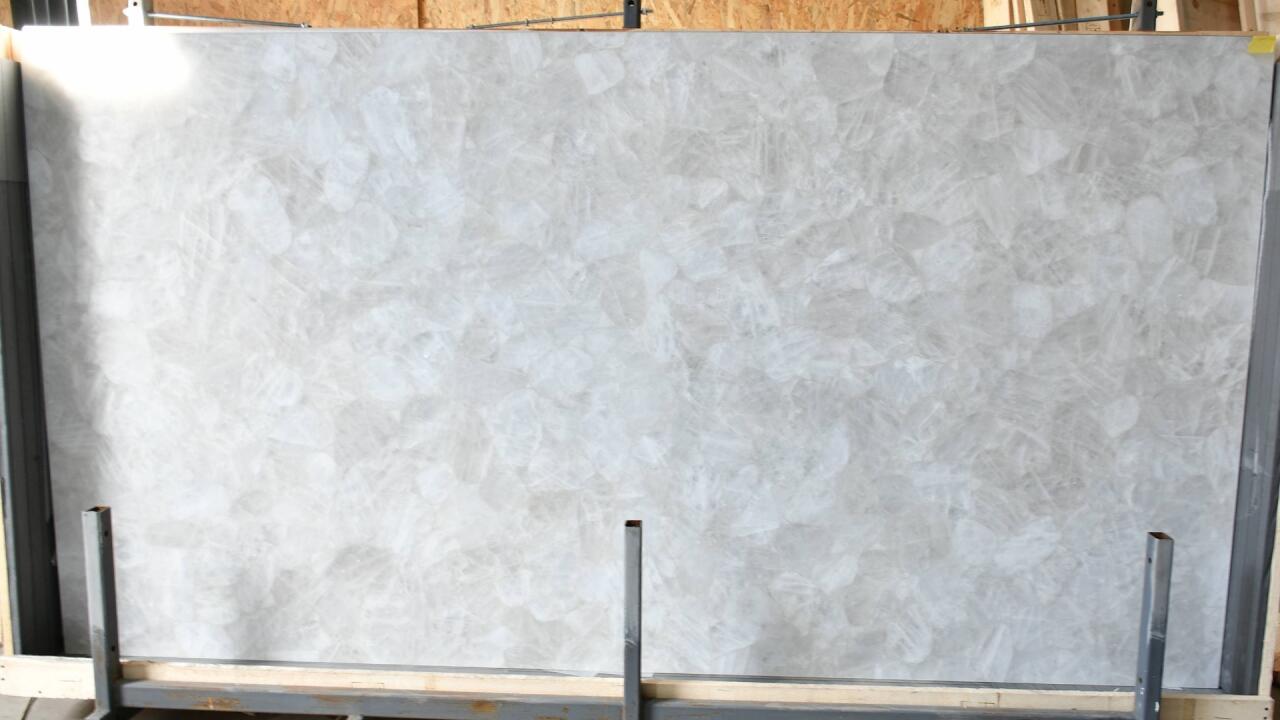
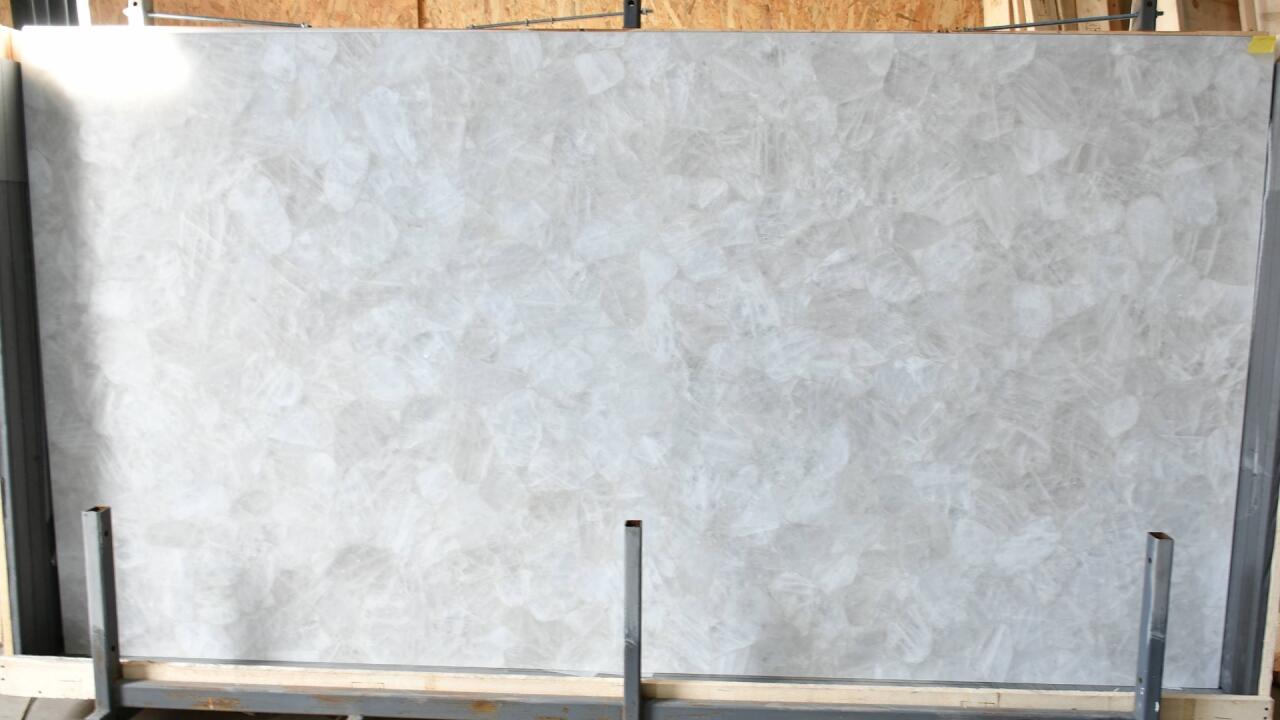
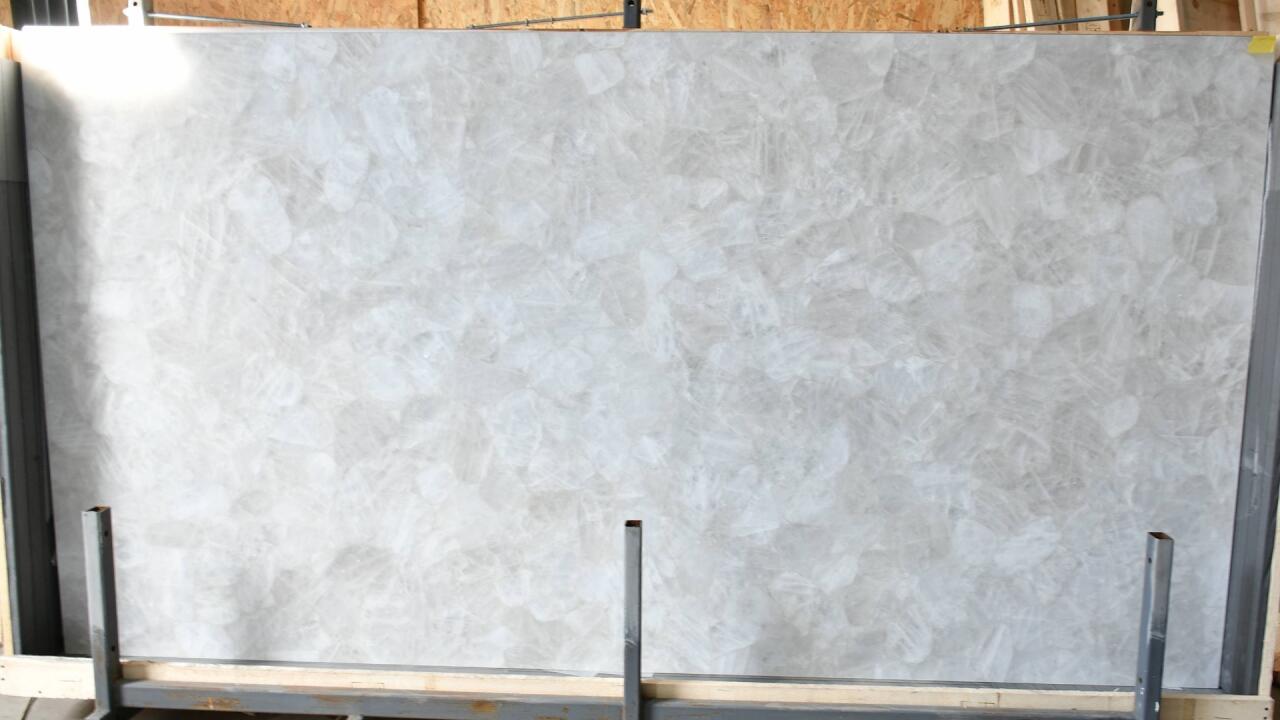
Lot 121662-17 is one slab of 2 cm Blue Giant Agate semi-precious stone, in a polished finish. The slab measures about 119″ × 63″, with one slab available at our Los Angeles yard.
This slab
The recorded size of a slab in this lot is 119″ × 63″, about 52 square feet. Thickness is 2 cm.
The polished finish is reflective and lets the color read clearly. Two centimeters is a standard slab thickness for counters, vanities, and wall cladding.
In the yard
Lot 121662-17 at our Los Angeles yard shows one slab in stock, none on hold, and one slab available. Available means in stock minus slabs on hold.
With one slab available, it suits a project that can be cut from a single piece.
Where it works
For this kind of stone, the usual applications are feature walls, bar tops, and accent panels. The right use still depends on the finish, the thickness, and how the slab will be cared for after it is installed. Inspiration photos show this stone in a Bathroom.
The material
Semi-precious slabs are cut from strongly colored minerals, often quartz, agate, or jasper. They are usually used as feature walls, bar tops, and accents rather than as a full kitchen. Pattern and color are highly individual, so the piece in stock is the one to design from.
About Blue Giant Agate
Blue Giant Agate is a captivating semi-precious stone, a variety of chalcedony prized for its translucent quality and rhythmic, banded patterns. Primarily sourced from volcanic deposits in Brazil and Namibia, this microcrystalline quartz forms over millions of years as silica-rich fluids deposit layers within rock cavities. While natural agate is often gray, these "Giant" specimens are frequently enhanced to showcase vibrant, celestial blues that highlight their intricate, fortification-like rings. With a Mohs hardness of 7, it is as durable as it is beautiful. Interestingly, the stone’s name traces back to the Achates River in Sicily, where the Greek naturalist Theophrastus first discovered it around 300 B.C.