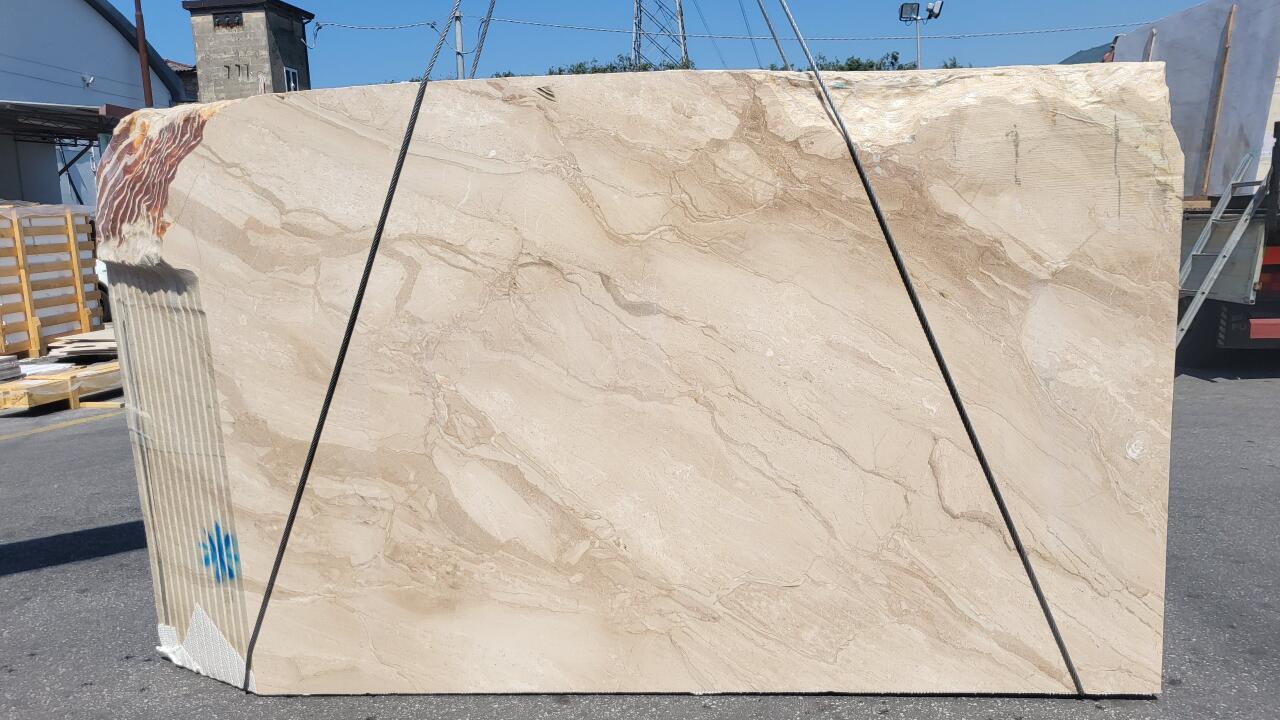
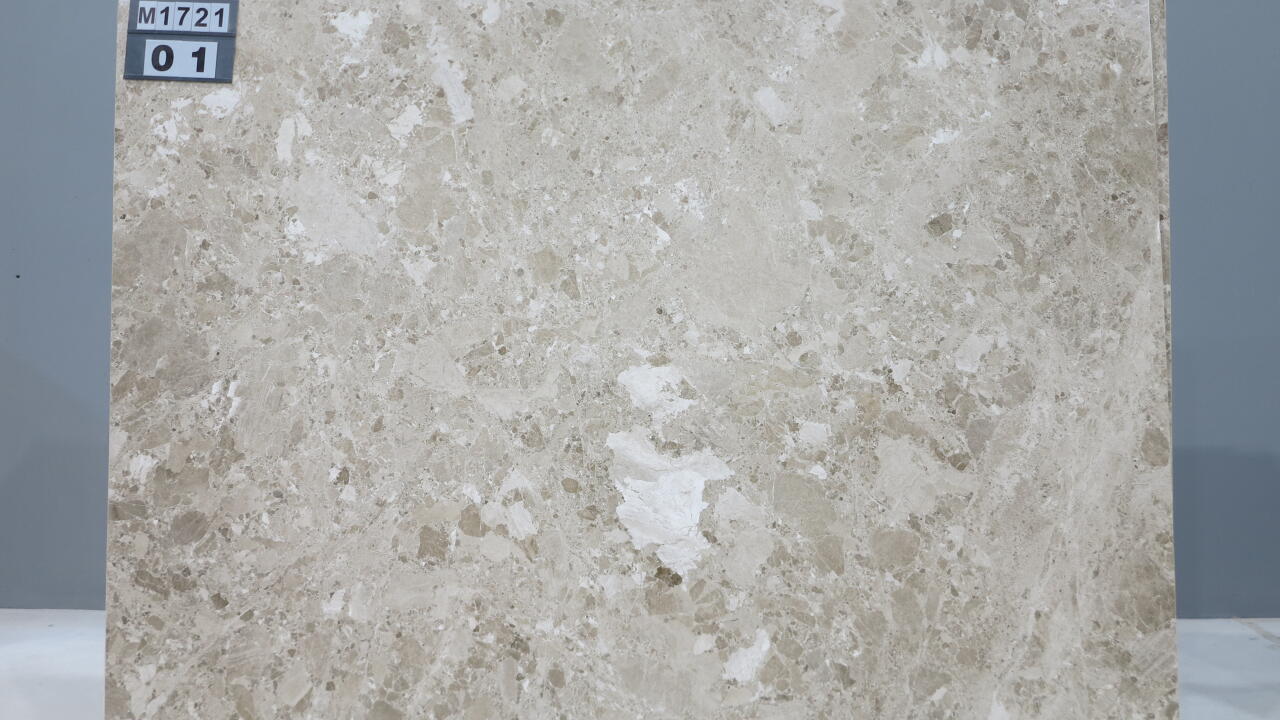
Ceppo Di Gre Original is a 2 cm marble from Italy, offered in a honed finish. Lot 25092 runs from 108″ × 51″ to 114″ × 54″ at our Los Angeles slab gallery.
This slab
The recorded size of a slab in this lot is 112″ × 53″, about 41 square feet. Sizes across the lot run from 108″ × 51″ to 114″ × 54″. Thickness is 2 cm. This material is recorded as quarried in Italy.
The honed finish is smooth and matte, without a high gloss. Two centimeters is a standard slab thickness for counters, vanities, and wall cladding.
In the slab gallery
The slabs can be seen in person at our Los Angeles slab gallery before anything is cut.
Where it works
For this kind of stone, the usual applications are bathrooms, vanities, fireplace surrounds, and feature walls. The right use still depends on the finish, the thickness, and how the slab will be cared for after it is installed. Inspiration photos show this stone in a Floor and a Kitchen.
The material
Marble is a metamorphic stone, recrystallized from limestone, and it is valued for veining and a luminous surface. It is softer and more sensitive to acids than granite or quartzite, so wine, citrus, and strong cleaners can etch a polish. That is why it is a classic for bathrooms, vanities, fireplaces, and walls, and for kitchens when the owner wants the look and will live with a natural patina. A honed face shows etching less than a high polish. Vein direction should be planned on the actual slabs before fabrication.
About Ceppo Di Gre Original
Ceppo Di Gre Original is a prestigious ornamental stone from the slopes of Monte Clemo near Lake Iseo in Lombardy, Italy. While often commercially classified as a marble due to its exceptional workability and high polish, it is geologically a dolomitic breccia. It is defined by a sophisticated blue-grey palette and a unique "conglomerate" aesthetic, featuring a natural mosaic of large and small rounded clasts. This iconic stone has defined Milanese architecture for centuries, appearing in historic landmarks like the Palazzo Marino. Its remarkable resistance to abrasion has even made it a preferred choice for high-traffic international projects, including the Munich subway.