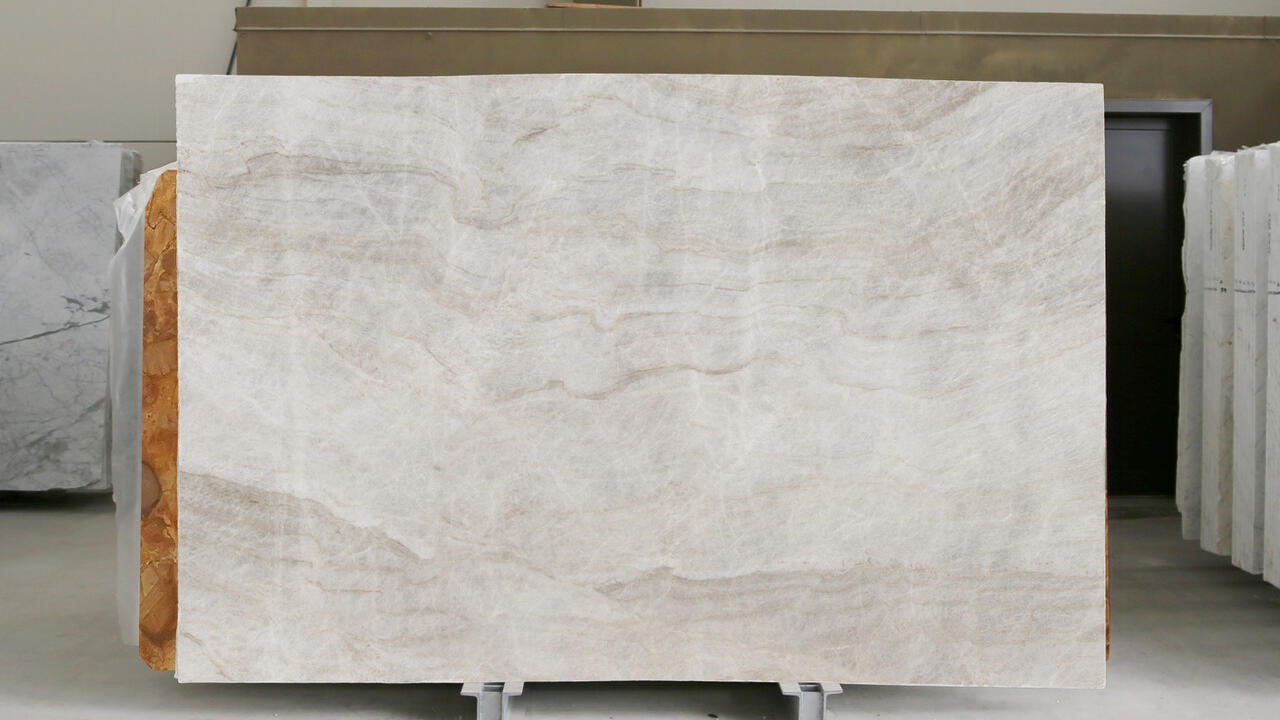
Taj Mahal is a premier natural quartzite quarried in the Uruoca region of Brazil, highly coveted for its sophisticated aesthetic that mirrors high-end Italian marble. It features a luminous creamy-white to soft beige background, elegantly detailed with subtle, wispy veins of gold and amber. As a true quartzite, it offers exceptional durability, ranking approximately 7 on the Mohs scale, making it resistant to heat, scratches, and etching. Despite its name, which pays homage to the ivory-white tones of the iconic Indian mausoleum, this stone is geologically distinct and significantly harder than the marble used in that historic monument.
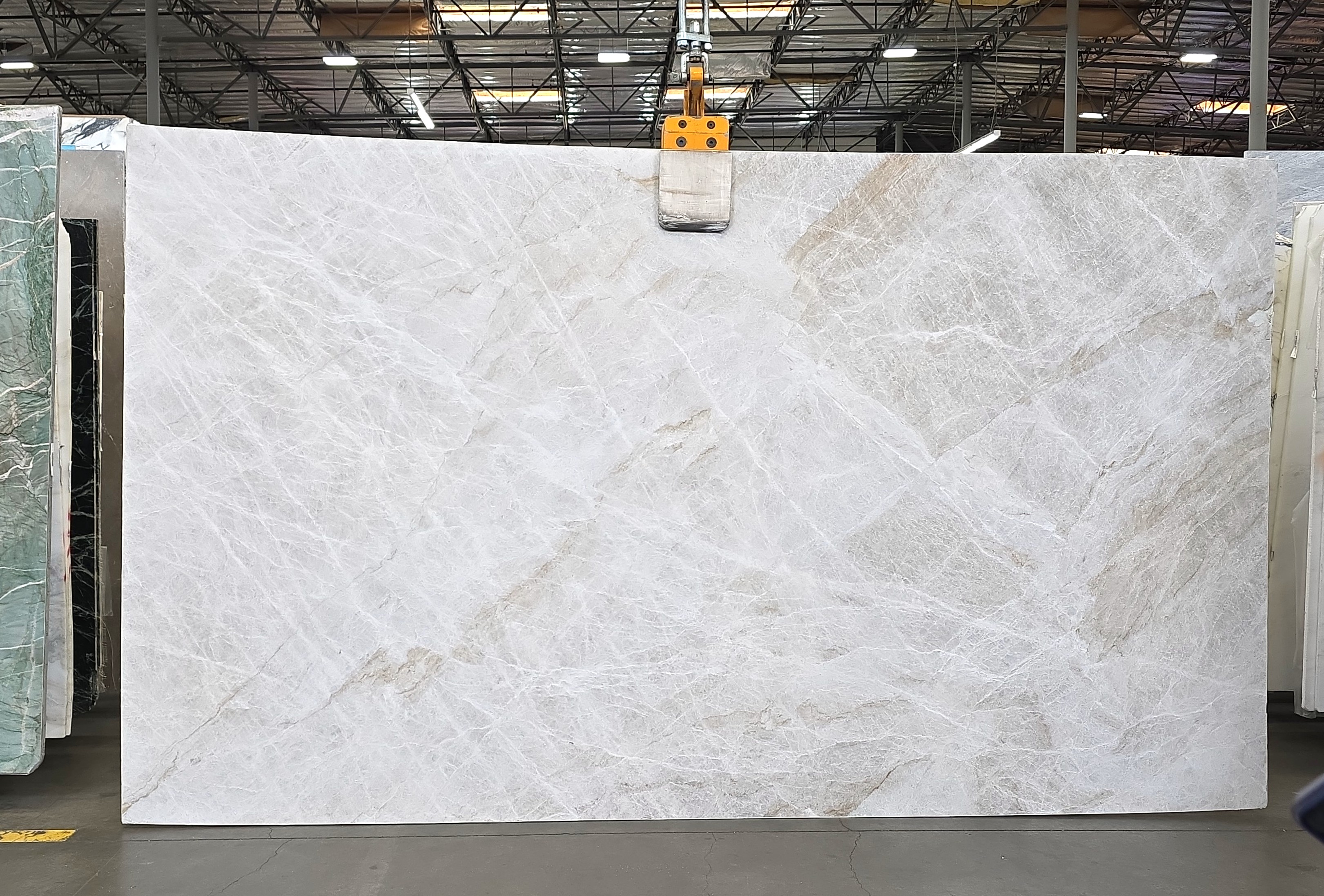
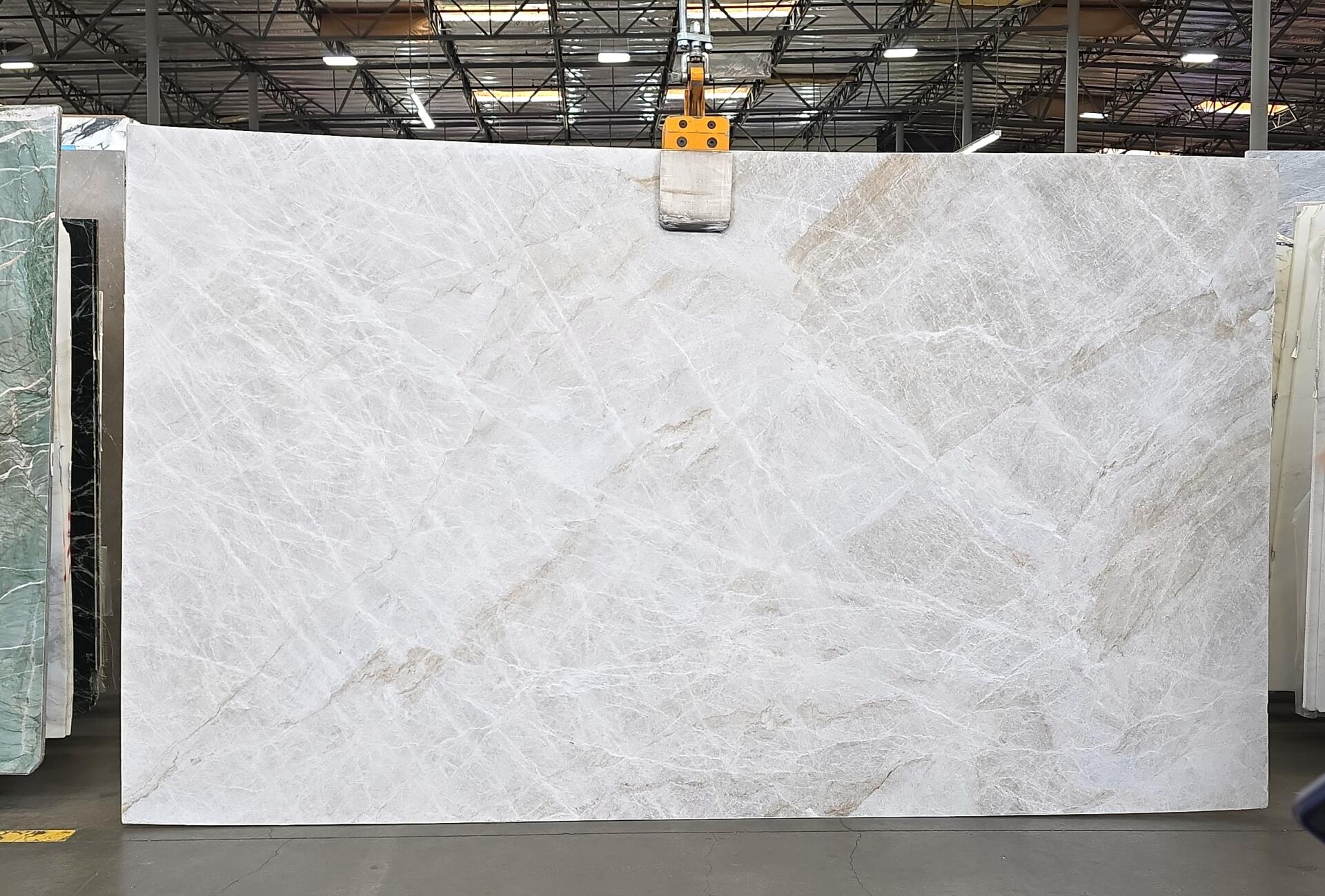
This polished quartzite is Taj Mahal, in beige with semi-white, ivory, white, and grey, cut at 2 cm and quarried in Brazil. Lot 447/25 measures about 133″ × 78″, with 4 slabs available and 4 on hold at our Los Angeles yard.
This slab
The recorded size of a slab in this lot is 133″ × 78″, about 72 square feet. Thickness is 2 cm. The color on record is beige with semi-white, ivory, white, and grey. Natural stone still varies inside that description, so the slab itself is the reference for movement and shade. This material is recorded as quarried in Brazil.
The polished finish is reflective and lets the color read clearly. Two centimeters is a standard slab thickness for counters, vanities, and wall cladding.
In the yard
Lot 447/25 at our Los Angeles yard shows 8 slabs in stock, 4 slabs on hold, and 4 slabs available. Available means in stock minus slabs on hold.
The slabs can be compared in daylight at our Los Angeles yard before anything is cut.
Where it works
For this kind of stone, the usual applications are kitchen countertops, islands, and vanities. The right use still depends on the finish, the thickness, and how the slab will be cared for after it is installed. Inspiration photos show this stone in an Accent wall and a Kitchen.
The material
Quartzite begins as sandstone and is metamorphosed into a hard, quartz-rich stone. It is chosen for kitchens and islands when a project wants marble-like movement with more scratch and heat resistance than marble. Density and absorbency still vary by quarry, so sealing should be confirmed on the slab in front of you, not assumed from the name. Movement can change across one lot, which is why the pieces are best compared side by side in daylight.
About Taj Mahal
Taj Mahal is a premier natural quartzite quarried in the Uruoca region of Brazil, highly coveted for its sophisticated aesthetic that mirrors high-end Italian marble. It features a luminous creamy-white to soft beige background, elegantly detailed with subtle, wispy veins of gold and amber. As a true quartzite, it offers exceptional durability, ranking approximately 7 on the Mohs scale, making it resistant to heat, scratches, and etching. Despite its name, which pays homage to the ivory-white tones of the iconic Indian mausoleum, this stone is geologically distinct and significantly harder than the marble used in that historic monument.