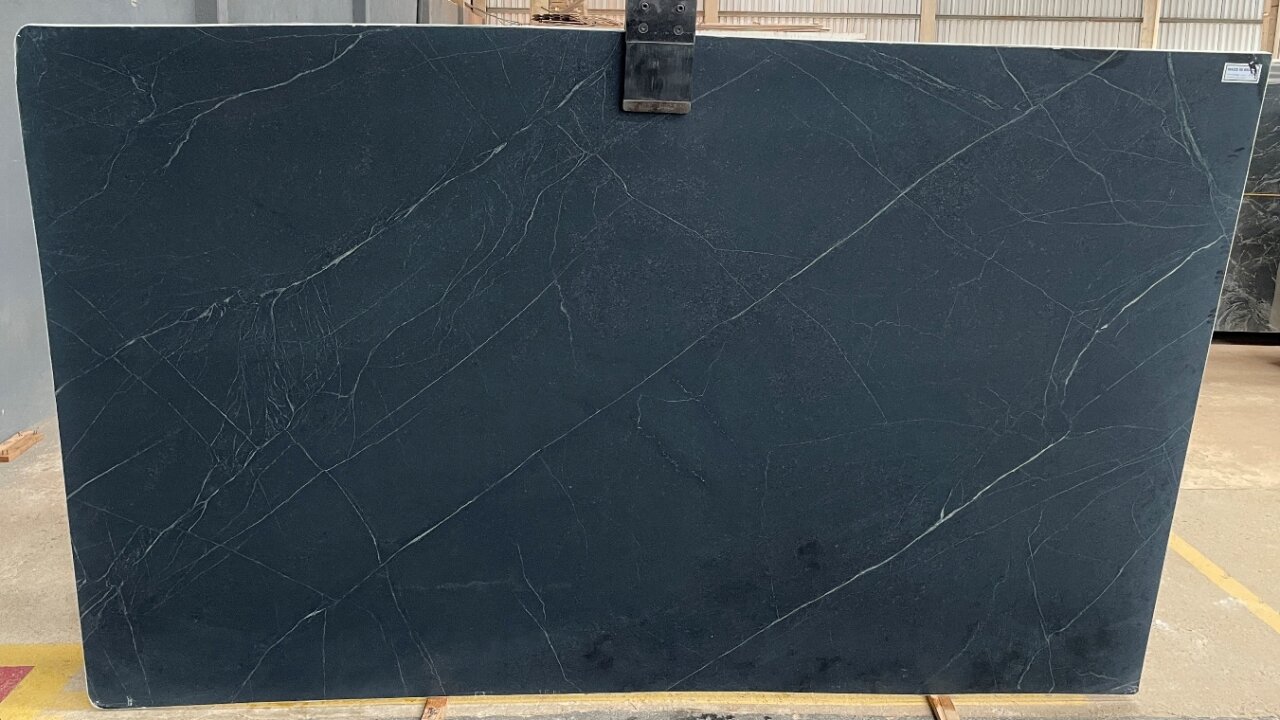
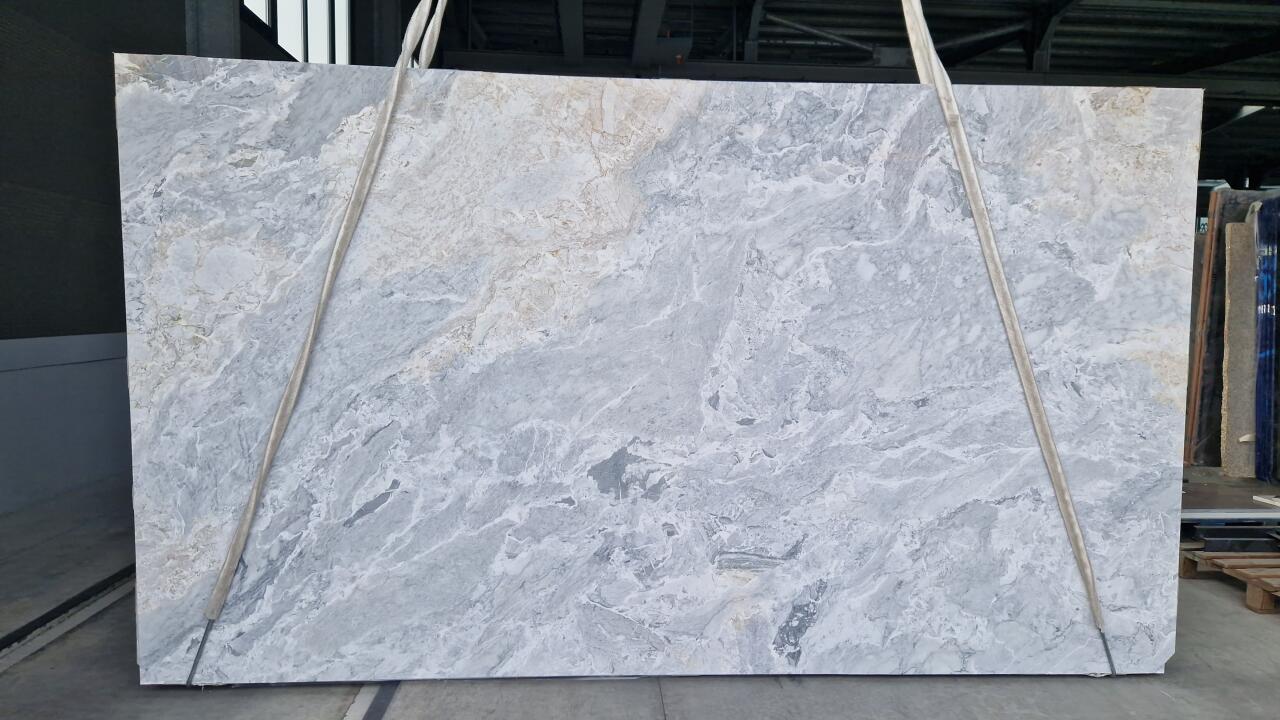
Lot 3844 is a 2 cm Grey Soapstone soapstone, from Brazil, in a honed finish. The slabs run from 122″ × 78″ to 123″ × 78″ at our Los Angeles slab gallery.
This slab
The recorded size of a slab in this lot is 123″ × 78″, about 67 square feet. Sizes across the lot run from 122″ × 78″ to 123″ × 78″. Thickness is 2 cm. The color on record is grey. Natural stone still varies inside that description, so the slab itself is the reference for movement and shade. This material is recorded as quarried in Brazil.
The honed finish is smooth and matte, without a high gloss. Two centimeters is a standard slab thickness for counters, vanities, and wall cladding.
In the slab gallery
The slabs can be seen in person at our Los Angeles slab gallery before anything is cut.
Where it works
For this kind of stone, the usual applications are countertops and sinks. The right use still depends on the finish, the thickness, and how the slab will be cared for after it is installed. Inspiration photos show this stone in an Outdoor Bar / BBQ.
The material
Soapstone is a dense, talc-rich stone with a soft, waxy feel. It resists heat and is often used for countertops and sinks. It scratches more easily than granite. Those marks are usually sanded or refreshed with mineral oil rather than sealed the way marble is. Color is typically gray, green, or near-black and stays fairly even.
About Grey Soapstone
Grey Soapstone is a classic natural stone primarily quarried in the mineral-rich regions of Minas Gerais, Brazil. Characterized by its soft, medium-gray palette, this traditional variety often features subtle white or light gray veining that adds depth and movement. Known for its high talc content, it possesses a unique, velvety texture that is famously smooth to the touch. Beyond its aesthetic appeal, Grey Soapstone is remarkably functional; it is non-porous, chemically inert, and exceptionally heat-resistant. Interestingly, while its surface is soft enough to be carved with hand tools, its density makes it nearly indestructible against thermal shock and acidic spills.