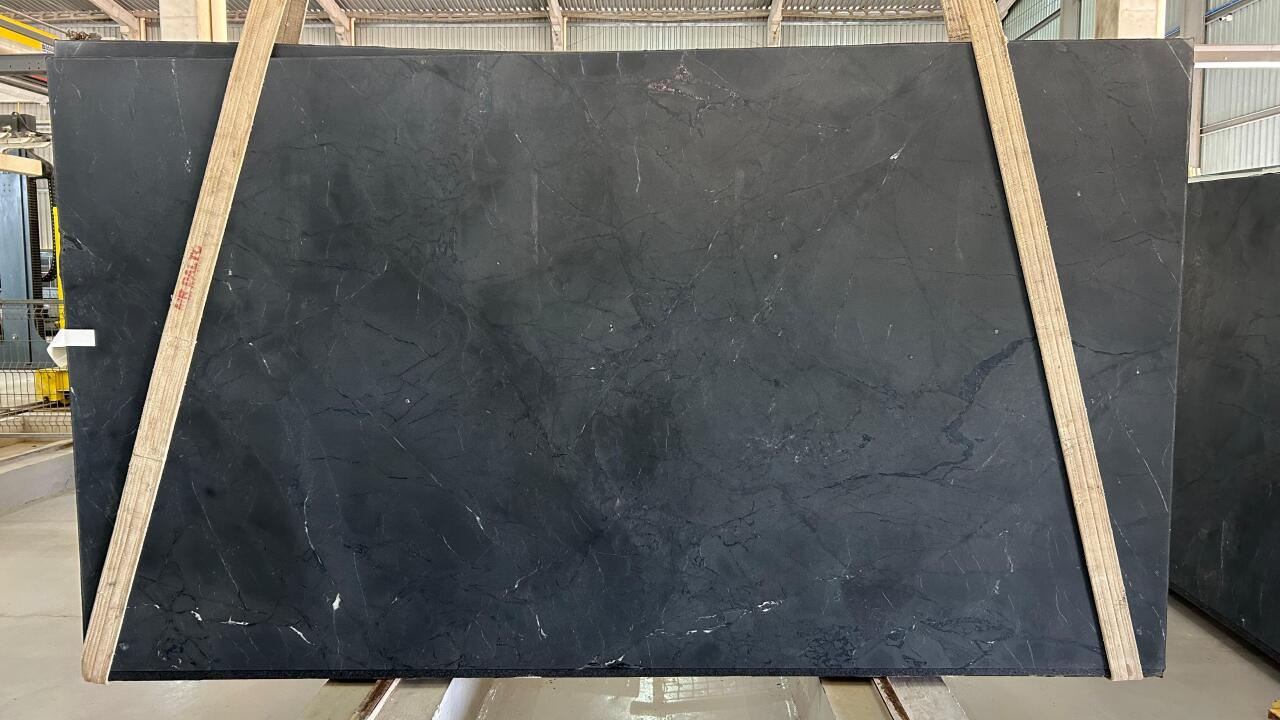
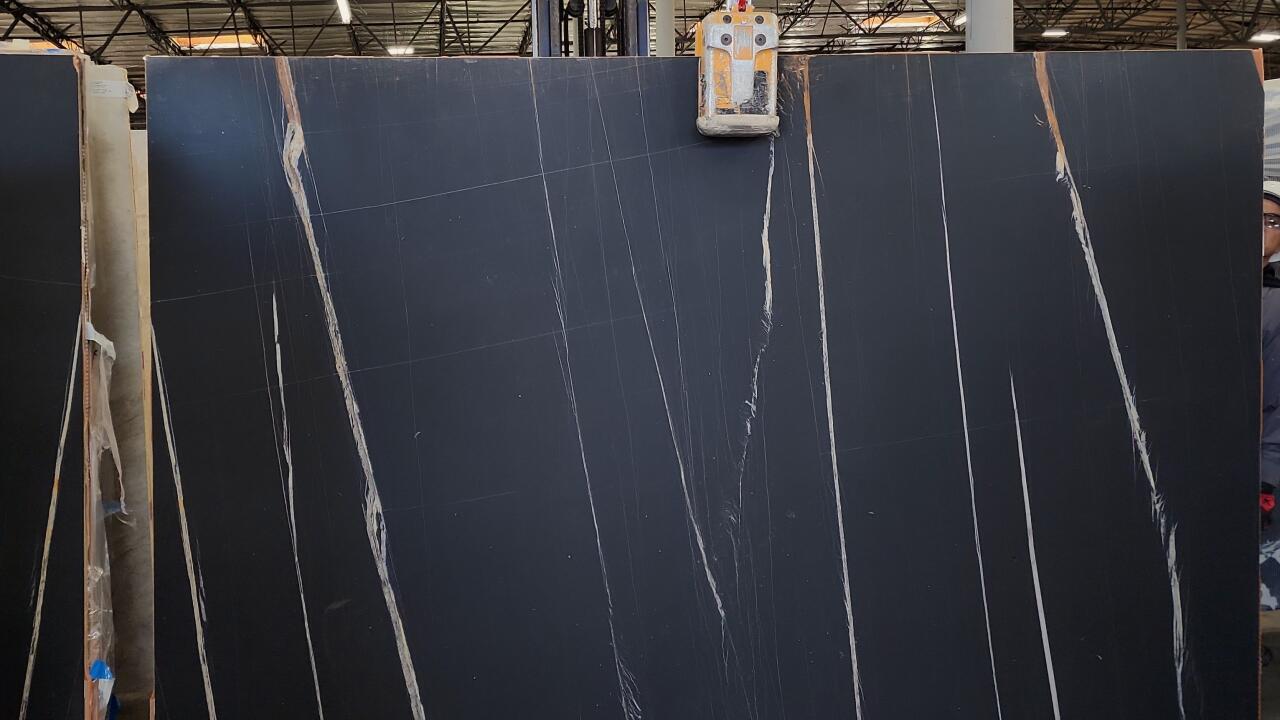
Just in: a new arrival of Saratoga Black at our Los Angeles yard.
This honed soapstone is Saratoga Black, also known as Black Soapstone, cut at 2 cm and quarried in Brazil. Lot 3766 measures about 128″ × 80″, with 22 slabs available and 6 on hold at our Los Angeles yard.
This slab
The recorded size of a slab in this lot is 128″ × 80″, about 71 square feet. Thickness is 2 cm. The color on record is black. Natural stone still varies inside that description, so the slab itself is the reference for movement and shade. Saratoga Black is also known as Black Soapstone. Searching either name should lead to this same material. This material is recorded as quarried in Brazil.
The honed finish is smooth and matte, without a high gloss. Two centimeters is a standard slab thickness for counters, vanities, and wall cladding.
In the yard
Lot 3766 at our Los Angeles yard shows 28 slabs in stock, 6 slabs on hold, and 22 slabs available. Available means in stock minus slabs on hold.
The slabs can be compared in daylight at our Los Angeles yard before anything is cut.
Where it works
For this kind of stone, the usual applications are countertops and sinks. The right use still depends on the finish, the thickness, and how the slab will be cared for after it is installed.
The material
Soapstone is a dense, talc-rich stone with a soft, waxy feel. It resists heat and is often used for countertops and sinks. It scratches more easily than granite. Those marks are usually sanded or refreshed with mineral oil rather than sealed the way marble is. Color is typically gray, green, or near-black and stays fairly even.
About Saratoga Black
Saratoga Black is a premier soapstone quarried in Brazil, characterized by its deep charcoal to midnight black surface often accented by subtle, light-colored veining. This metamorphic rock is composed primarily of talc, giving it a signature velvety, matte texture that is remarkably soft to the touch yet incredibly dense. Renowned for being naturally non-porous and chemically inert, it is immune to acidic etching and bacterial growth. Its exceptional thermal mass allows it to withstand direct heat without damage, a property that historically made soapstone the material of choice for laboratory benched and 18th-century wood-burning stoves. While it can develop a natural darkened patina over time, applying mineral oil or wax can instantly enhance its dramatic, rich luster.